Digital communication that convinces – efficiency, flexibility, and growth potential
Digitalization is fundamentally changing how companies, organizations, and public institutions communicate with their target groups. Digital signage—the use of digital screens and interactive systems to convey information and advertising—has long since become a central component of modern communication strategies. Both end customers and resellers benefit from a multitude of advantages that go far beyond traditional advertising and information media.
What is digital signage?
Digital signage refers to the centralized, digital control and playback of content on screens, displays, video walls, or interactive terminals. The content—such as advertisements, company news, product information, room occupancy, or security messages—can be customized across locations, tailored to specific target groups, and adjusted in real time. Possible applications range from retail and corporate communications to public institutions, catering, healthcare, and transportation.
A modern digital signage system usually consists of the following components:
- Displays/monitors: From small information displays to large-format video walls, indoor or outdoor, touchscreen or classic.
- Media players or integrated hardware: These devices play and manage content, often in the form of compact, robust devices.
- Content management software (CMS): Content is planned, controlled, updated, and distributed to the various displays via a central platform.
- Network connection: The systems are mostly cloud-based and allow location-independent control and remote maintenance.
What makes it special is that you can centrally manage content for individual displays, entire branch networks, or international locations and adapt it in a flash—whether it's promotional campaigns, safety information, or personalized greetings.
The advantages of digital signage for end customers
Maximum flexibility and timeliness
Digital signage allows you to control your content centrally and in real time. Whether it's daily specials, safety information, event announcements, or seasonal promotions, changes can be implemented in seconds, across locations, and without media discontinuity. This saves time, avoids sources of error, and makes your communication dynamic and responsive. You can react spontaneously to events, adjust campaigns, or display emergency information immediately.
Increase awareness and reach
Digital displays generate maximum attention. Moving images, bright colors, and interactive elements ensure that your messages are noticed both indoors and outdoors. Your reach increases because you can target different audiences and flexibly display your content on different displays. Studies show that digital signage increases attention by up to 60% compared to static media.
Improved user experience and orientation
Digital signage systems offer clear, intuitive orientation for visitors, customers, and employees. Digital guidance systems, room occupancy information, current queues, and information terminals facilitate navigation, reduce waiting times, and increase satisfaction. Interactive applications enable self-service, product advice, or individual searches for information. This is a clear advantage, especially in complex buildings such as hospitals, shopping centers, or company headquarters.
Efficiency and cost savings
Centralized content management reduces the effort required for printing, logistics, and manual updates. You save costs in the long term, as physical advertising materials no longer need to be produced and updates can be made simultaneously across all locations. The systems are scalable—from individual displays to complex international networks. In addition, there is no need to replace outdated posters or notices.
Modern image and innovative strength
Digital signage allows you to position yourself as a forward-looking, innovative company. Digital communication solutions strengthen your brand, create a modern atmosphere, and signal professionalism and service orientation. This not only increases customer awareness, but also makes your company more attractive to employees and partners. Companies that use digital signage are considered progressive, flexible, and customer-oriented.
Target group-specific delivery and personalization
Targeted control based on location, time of day, or target group allows you to deliver precisely tailored content. This increases the relevance of your messages, avoids wastage, and addresses customers or visitors at exactly the right moment—for example, with individual offers or location-specific information. Sensors or AI can even be used to deliver interactive and personalized content.
The benefits of digital signage for resellers
Growing markets and new sales opportunities
Digital signage is growing rapidly across all industries—from retail, catering, hospitality, and education to industry, administration, and public spaces. This opens up attractive markets for resellers and the opportunity to tap into new customer groups. Forecasts predict double-digit growth rates in the coming years.
Expansion of the service portfolio and differentiation
With digital signage, you offer your customers more than just hardware: consulting, design, installation, software, content services, maintenance, and training become new areas of business. The combination of technical expertise and industry knowledge gives you a clear competitive advantage and promotes lasting customer loyalty.
Recurring revenue through service and support
Digital signage is not a one-time business. Service contracts, content maintenance, software updates, and enhancements generate recurring revenue. The systems are expandable, allowing you to grow with your customers and build long-term partnerships. Service and support become important sources of revenue.
Efficient project implementation and high customer satisfaction
Thanks to modern software solutions, digital signage projects can be planned, implemented, and managed efficiently. Centralized control and remote maintenance minimize effort and enable quick responses to customer requests or malfunctions. This increases satisfaction among both your customers and their end users.
Innovation lead and brand strengthening
As a provider of innovative digital signage solutions, you position yourself as a modern, future-oriented partner. You strengthen your own brand, build expertise, and benefit from the positive perception of digital communication—both in B2B and end customer business.
Practical examples: Digital signage in use
retail
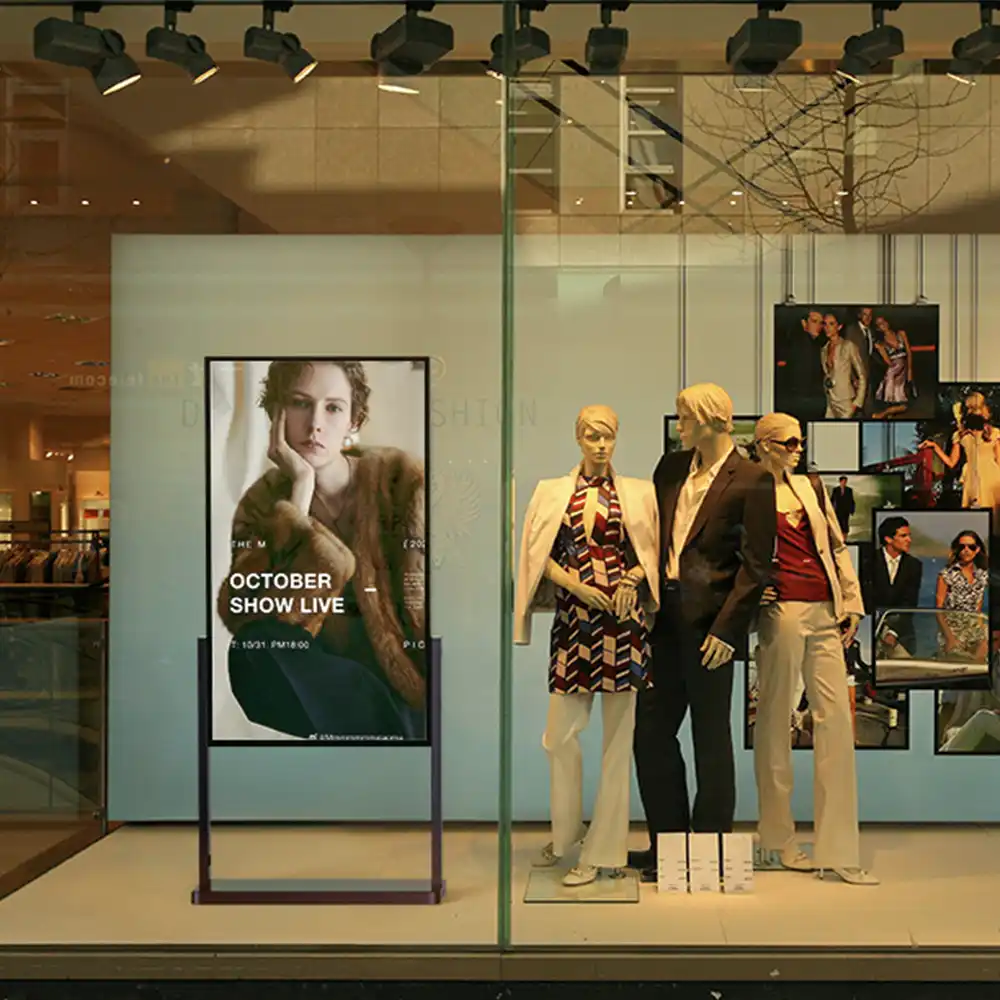
Digital storefront displays, promotional screens at the point of sale, interactive product advisors, and video walls create a modern shopping experience, increase dwell time, and have been proven to boost sales. With targeted content planning, offers can be updated daily and seasonal campaigns can be easily implemented.
Business & Administration
Digital reception displays welcome visitors, internal information screens keep employees informed, and digital signposts make it easier to find your way around large buildings and create transparency. Important key figures, safety information, or company news can be quickly disseminated via internal communications.
Catering & Hospitality
Digital menu boards display current dishes, self-ordering terminals speed up service, and event information and offers can be flexibly adapted and displayed in real time. Hotels use digital signage for guest information, event announcements, or directions within the building.
healthcare
Digital information systems reduce waiting times, provide guidance in complex buildings, provide information about current measures or safety regulations, and offer entertainment in waiting areas. Patient call systems and room occupancy are also digitally displayed.
Public space & transportation
Weatherproof outdoor displays provide information about departure times, delays, emergencies, or events—always up to date and clearly visible, even in difficult lighting and weather conditions. Cities and municipalities are increasingly using digital signage for citizen information or tourist information.
Current trends and future prospects
- Interactivity: Touch displays, gesture control, and QR codes enable new service and consulting experiences.
- Cloud-based systems: Centralized, location-independent control, easy scalability, and automation.
- AI and data integration: Artificial intelligence analyzes user behavior and optimizes content delivery.
- Sustainability: Energy-efficient hardware, e-paper displays, and intelligent controls help conserve resources.
- Omnichannel communication: Integrating digital signage into the overall communication strategy (web, app, social media) ensures a consistent brand experience.
Tips for a successful start
- Analyze needs and target groups: Who should be reached? What information is relevant?
- Choose the right technology and size: indoor, outdoor, touch, high brightness—depending on the area of application.
- Develop a content strategy: Make content short, concise, up-to-date, and brand-compliant.
- Plan service and maintenance: Regular updates, monitoring, and support ensure long-term success.
- Build a partner network: Collaboration with manufacturers, agencies, and IT service providers facilitates implementation.
Conclusion: Digital signage as a success factor for resellers and end customers
Digital signage is much more than just a technical trend. It is a powerful tool for making communication more efficient, flexible, and effective—for operators, resellers, and users alike. Resellers benefit from a dynamic growth market, diverse business models, and sustainable customer relationships. End customers gain efficiency, reach, service quality, and a modern brand image.
Those who rely on digital signage today are investing in the future of communication—and gaining decisive competitive advantages.
Would you like to learn more or start a digital signage project right away?
Contact us for a no-obligation consultation or a customized quote. The signaro team signaro you from the initial idea to successful implementation—competently, cooperatively, and with an eye to the future.
FAQ – Frequently asked questions about digital signage
What is digital signage?
Digital signage refers to the digital display of content such as information, advertising, or interactive applications on screens, displays, or video walls. The content is controlled centrally and can be updated flexibly, across locations, and in real time.
In which industries does the use of digital signage make sense?
Digital signage can be used across all industries: retail, catering, hotels, businesses, administration, healthcare, educational institutions, public transport, events, and many more benefit from the diverse possibilities of digital communication.
What advantages does digital signage offer over traditional print media?
Digital solutions enable immediate, centralized updating of all content—without printing costs or wasted time. They attract more attention through moving images and flexible targeting of different audiences. They are also more sustainable, as they do not consume paper.
How is the content on the displays controlled?
The content is managed via central software (content management system). It can be planned across locations, time-controlled, and updated in real time—conveniently from the office or even on the go.
Is digital signage also useful for small businesses?
Yes, small businesses can also benefit from digital signage! Even with just a few displays, information, offers, or services can be presented professionally and flexibly. The initial costs are manageable and the systems are scalable.
What is the difference between indoor, semi-outdoor, and outdoor displays?
Indoor displays are designed for protected indoor areas and impress with their brilliant display quality.
Semi-outdoor displays offer extra-bright panels and robust housings for light-intensive, partially protected areas such as shop windows or passageways.
Outdoor displays are weatherproof, vandal-proof, and designed for permanent outdoor use.
Can existing content (e.g., promotional videos or images) be reused?
Generally, yes. Most digital signage systems support common media formats such as images, videos, or PDFs. Existing content can be easily integrated and flexibly displayed.
How complex is installation and maintenance?
Depending on the scope, installation is usually straightforward and can be carried out by specialized partners. Many systems are low-maintenance and can be monitored and updated remotely, which significantly reduces the effort required by operators.
What support does signaro offer signaro implementation?
signaro you from consulting and selecting the right hardware and software to installation and commissioning. We also provide support, maintenance, and training afterward to ensure smooth operation and lasting success.
Do you have any further questions?
Feel free to contact us—our team of experts is always available to assist you personally!