Why is content design crucial to your success?
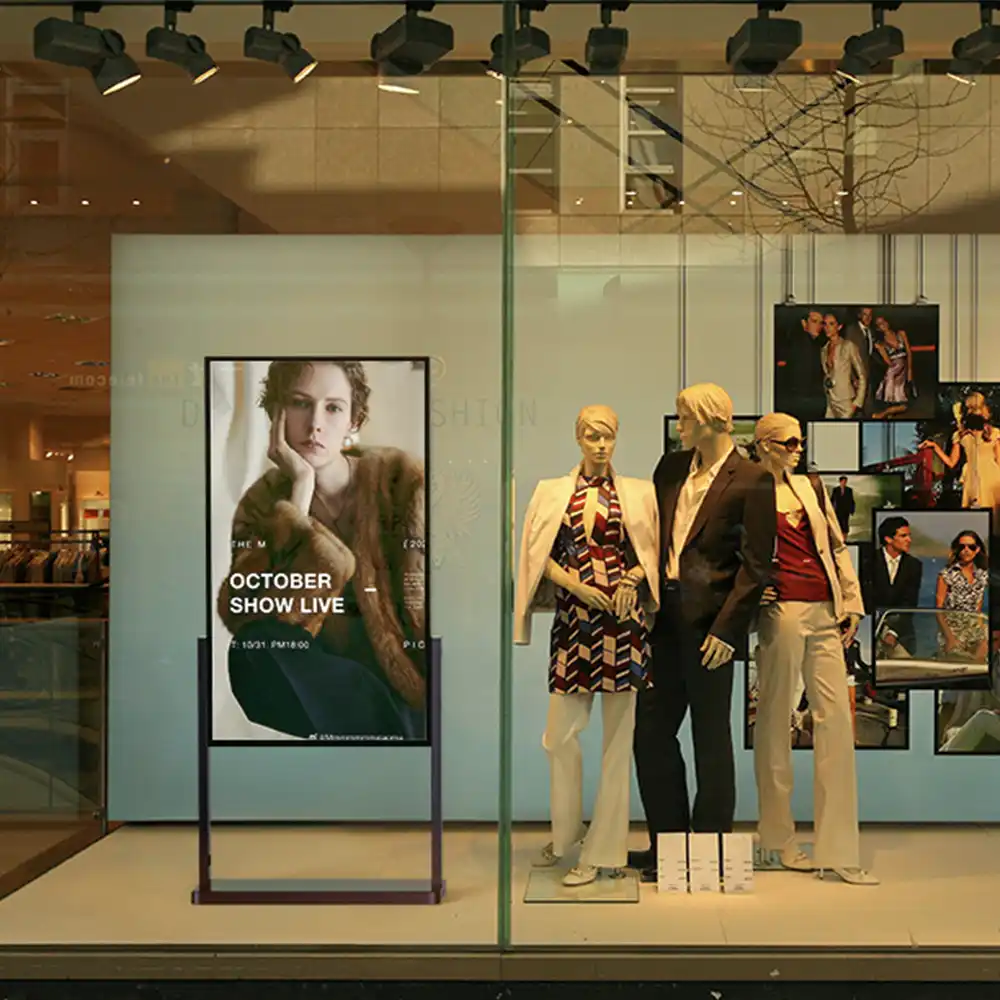
Even the best digital signage hardware only has an impact when it is accompanied by appealing, targeted content. In retail, the quality of your content design determines whether you attract attention, activate customers, and increase your sales. In this article, you will learn how to plan, design, and keep your content up to date in the best possible way—and which mistakes you should avoid at all costs.
The most important principles for successful digital signage content
1. Short, clear, and concise:
Your customers usually only take in messages for a few seconds. Formulate all content as briefly and comprehensibly as possible. Use simple language, avoid technical terms, and get to the heart of the core message. A slogan, a price, and a product image often have a stronger impact than long texts.
2. Large font and strong contrasts:
Use easily legible fonts and sufficiently large font sizes. High contrast between text and background ensures optimal readability—even in sunlight or difficult lighting conditions. Avoid playful or overly thin fonts. Rule of thumb: main messages should be at least 30 px, headlines can be even larger.
3. High-quality images and videos:
Only use professional, high-resolution images and videos. Moving images attract more attention than static content. Pay attention to the visual language: authentic, emotional motifs work better than interchangeable stock photos. Videos should be short and concise—ideally 5 to 15 seconds per clip.
4. Clear calls to action:
Encourage your customers to take action—for example, "Act now!", "Scan here and save!", "Try it now!" or "Ask our team." Place CTAs in a clearly visible position and use colors that stand out from the background.
5. Variety and topicality:
Combine different content formats (images, videos, text, animations) and update your content regularly—ideally seasonally or on a specific occasion. Changing content prevents habituation effects and keeps attention levels high.
6. Corporate design and recognition:
Stay true to your brand image: use your corporate colors, logos, and fonts. This ensures recognition and a professional appearance.
Templates and content ideas for retail
Special offers and promotions:
Short, eye-catching, with price and product image. Use striking colors for discounts or promotions. Example: "20% off all summer items! Today only."
Product information:
Benefits, tips for use, cross-selling ideas. Show how the product is used or which matching items you recommend.
Event and service information:
Information about events, advisory services, click & collect, opening hours, special sales, or workshops.
Signposts and orientation:
Graphic references to departments, services, or new products. Simple icons and clear arrows assist with navigation.
Customer feedback:
Integrate surveys, reviews, or social media posts. Show positive customer testimonials or invite people to participate in surveys.
Seasonal and local content:
Include holidays, local events, or weather—e.g., "Umbrellas now—perfect for the weather!"
Social media integration:
Embed current posts from Instagram, Facebook, or Google reviews. This creates trust and authenticity.
Mistakes you should avoid
- Too much text at once:
It is preferable to have several short slides than one overloaded slide. Stick to the 3-5 second rule: the content should be comprehensible within this time. - Restless or poorly coordinated color schemes:
Stick to your corporate design and make sure you use harmonious, high-contrast color combinations. - Outdated content:
Plan regular updates and responsibilities within the team. Nothing is worse than an outdated offer or an expired promotion. - Fonts that are too small or playful:
Focus on clarity and professionalism. Test the legibility from a typical distance. - Unclear messages:
Each advertisement should have only one main message. Multiple pieces of equally important information confuse the reader and weaken the effect. - Lack of performance monitoring:
Regularly check which content is working—and adjust your strategy accordingly.
Tips for resellers: How to support your customers
- Provide content templates for typical applications:
Make it easy for your customers to get started with ready-made templates for offers, event notices, product information, or guides. - Offer a short training course on content design and CMS:
Show best practices and give tips on layout, image selection, and text. - Emphasize the importance of timeliness and seasonal adaptation:
Remind them regularly about updates and offer an editorial plan as a template. - Offer optional content services or collaboration with agencies:
Many retailers are grateful for professional support with content creation. - Support performance monitoring:
Show how analytics tools are used to measure the effectiveness of content.
Best practices: How to succeed in content design in retail
1. Target group orientation:
Tailor content to the target group, time of day, and season. Use different messages in the morning than in the evening, offer seasonal promotions, and family deals on weekends.
2. Storytelling:
Tell stories! For example, show the journey of a product, customer opinions, or behind-the-scenes insights.
3. Use animations strategically:
Short animations or movements attract attention, but should not distract or overwhelm.
4. Interactive elements:
Use QR codes, touch displays, or surveys to engage customers and get feedback.
5. Local relevance:
Include local news, weather, events, or partner companies—this will make your communication more personal.
Trends in content design
- AI-supported content optimization:
Systems analyze which content works best and automatically adjust the display. - User-generated content:
Customer images or reviews are shown directly on the displays—for greater authenticity. - Dynamic content:
Content changes depending on the weather, time of day, or target group—for maximum relevance. - Accessibility:
Large font, clear language, and high-contrast design make content accessible to everyone.
FAQ – Frequently asked questions about content design in retail
How often should I update my content?
At least monthly, or even weekly or daily for promotions or seasonal topics. The more up-to-date the content, the higher the level of attention.
What font size is recommended?
Depending on display size and viewing distance, use at least 30 px for main messages. Test readability under real conditions.
Can I integrate social media content?
Yes, many systems support the integration of Instagram, Facebook, or Google reviews. Be mindful of the rights to images and comments.
How do I measure the success of my content?
Use analytics tools from your CMS, sales figures, customer feedback, and traffic flow analyses to evaluate effectiveness.
What should I do if I don't have time for content?
Use templates, automated feeds, or hire external service providers for content creation.
Conclusion: Content design as a factor for success
The right content design is the key to successful digital signage in retail. Short, clear, appealing, and up-to-date—this is how you attract your customers' attention, encourage interaction, and increase sales. Invest in good content, use templates, and get support when you need it—it pays off!