Why is digital signage so effective in retail?
In brick-and-mortar retail, the customer experience determines success and sales. With digital signage, you can create a modern, flexible, and attention-grabbing communication platform right at the point of sale. You can inform, inspire, and guide your customers in a targeted manner—and clearly stand out from the competition. Today, digital displays are much more than just digital posters: they are your key to a new, emotional, and efficient form of selling.
The most important applications of digital signage in retail
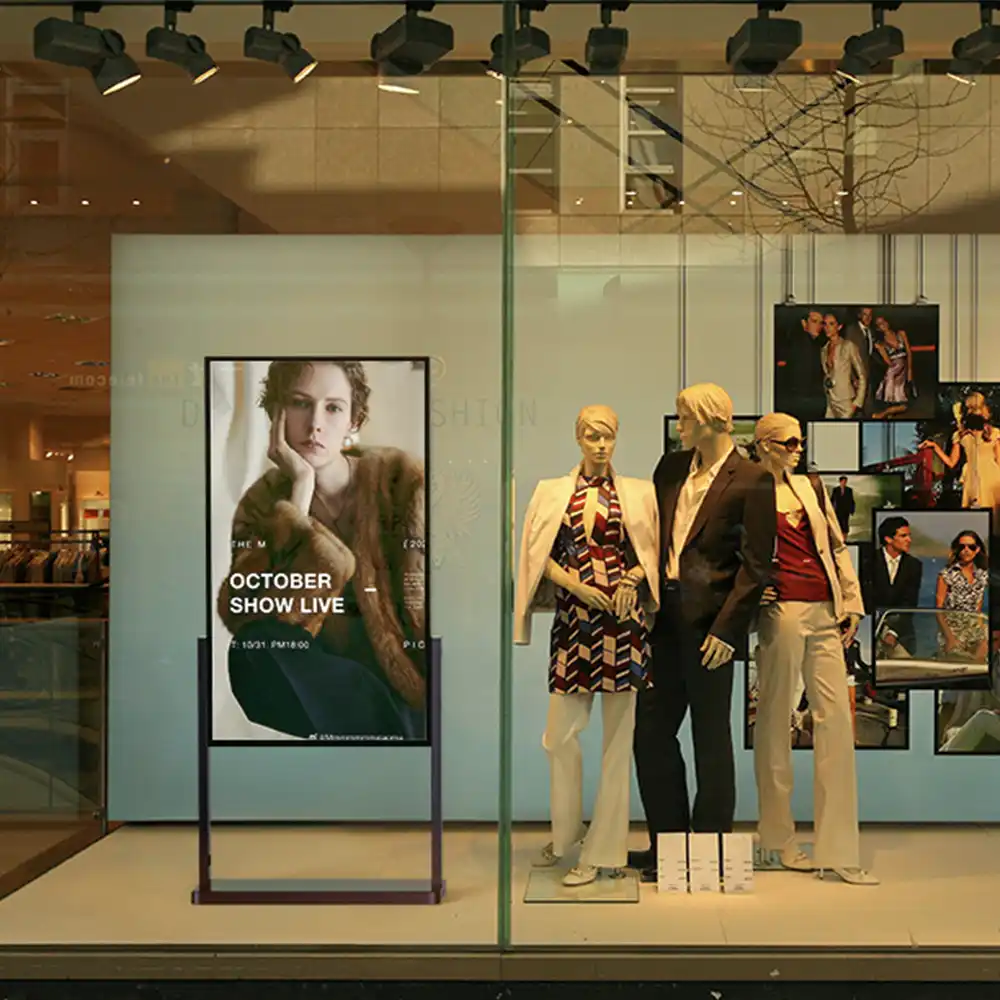
1. Shop window displays:
Attract passers-by into your store with moving images, current offers, and promotions. Dynamic content attracts attention and makes your shop window a real eye-catcher—even after closing time.
2. Digital customer stoppers:
Place flexible advertising messages directly in the entrance area or in high-traffic locations. With changing content, you can react quickly to new promotions, weather, or target groups.
3. Product presentations:
Showcase products perfectly with videos, animations, and background information. Display product benefits, application tips, or customer reviews right on the shelf.
4. Promotional ads and price changes:
Communicate daily offers or price changes in real time—without printing costs or wasting time. This allows you to remain flexible and respond specifically to competitors or demand.
5. Signage and customer information:
Improve orientation and service with digital maps, opening hours, or information about services. Digital signage helps optimize the shopping experience, especially in larger stores or shopping centers.
6. Interactive solutions:
Offer product finders, self-order terminals, or digital customer surveys. Let your customers take action themselves, provide advice, or configure products—this increases satisfaction and the length of time they spend on your site.
7. Social media integration:
Display live feeds from Instagram, Facebook, or TikTok on your screens for greater authenticity, community building, and up-to-date customer opinions.
Benefits for retailers and resellers
Increased sales:
Impulse purchases are encouraged, and offers reach the target group in a targeted manner. Studies show that digital signage significantly increases willingness to buy and the average purchase amount.
Flexibility:
Content can be adapted at any time and across locations. You can respond immediately to trends, weather, events, or stock levels—without wasting any time.
Modern image:
You position yourself as an innovative, service-oriented company. Digital solutions are perceived by customers as a sign of quality and progress.
Cost efficiency:
Reduced printing and personnel costs, quick response times to market changes. You save money, especially with frequently changing offers or promotions.
Data-driven optimization:
With sensors or AI, you can analyze customer behavior and respond to trends in a targeted manner. This allows you to optimize not only your content, but also your product ranges, placements, and marketing measures.
Central control:
Cross-store campaigns can be planned, controlled, and evaluated centrally—ideal for chains, franchises, or partnerships.
Best practices: How to successfully use digital signage in retail
Location analysis:
Place displays where they will attract maximum attention—for example, at the entrance, at the checkout, in the shop window, or in promotional areas. Analyze customer flows and walking routes.
Content planning:
Tailor content to your target audience, time of day, and season. Use short, concise messages and high-quality images and videos. Change your content regularly to keep attention levels high.
Integration:
Link digital signage with POS systems, merchandise management, or social media to play content automatically. Promotions and prices can thus be synchronized in real time.
Interactive solutions:
Offer product finders, customer feedback, or self-order terminals for a modern shopping experience. The more control customers have, the higher their satisfaction.
Regular updates:
Keep content up to date and take advantage of seasonal campaigns. Plan fixed update cycles or use automated feeds (e.g., weather, events, social media).
Storytelling and emotionalization:
Use moving images, stories, and testimonials to evoke emotions and strengthen brand loyalty.
Accessibility:
Ensure that font sizes are easy to read, contrasts are clear, and operation is intuitive—this will enable you to reach all customer groups.
Practical examples from the retail sector
- Fashion store:
Showcases business outfits in the morning, casual wear in the afternoon, and party looks in the evening—tailored to the target audience and time of day. - Supermarket:
Uses digital shelf labels for price changes, advertises daily specials at the entrance, and provides information about bonus programs at the checkout. - Electronics store:
Presents product videos and comparison tables directly on the shelf, offers interactive consulting tools for complex products. - Bakery:
Displays changing offers, allergy information, and customer reviews on a digital menu board.
Tips for resellers and retailers
- Start with a pilot project:
Test different locations, content, and formats. Optimize based on customer feedback and sales figures. - Train your team:
Raise awareness among your employees about the benefits and operation of the systems. - Use existing content:
Integrate social media, website feeds, or customer reviews to keep maintenance to a minimum. - Calculate total costs:
Take hardware, software, service, and ongoing maintenance into account—and compare different providers. - Rely on references:
Use best practices and success stories from other retailers to support your arguments.
Trends: What lies ahead for the retail sector?
- AI and personalization:
Content is adapted in real time to target groups, weather, or location. - Touchless technologies:
Gesture or voice control for even greater hygiene and convenience. - Omnichannel integration:
Digital displays are becoming part of the connected customer journey—from social media to the checkout. - Sustainability:
Energy-efficient displays, durable hardware, and paperless communication are becoming increasingly important. - Analytics and performance measurement:
More and more retailers are relying on data-driven optimization of their digital signage campaigns.
FAQ – Frequently asked questions about digital signage in retail
What is digital signage?
Digital signage refers to the digital form of presenting information and advertising on screens or displays. It is often used in public spaces, retail stores, transportation, and businesses to display content such as advertising, news, information, and announcements.
What is digital signage in retail?
Digital signage in retail refers to the use of digital displays, such as monitors or screens, to communicate information, advertising, or interactive content to customers. It is used to promote products, announce special offers, or improve customer service by providing engaging visual content.
What are some examples of digital signage applications?
Information displays in airports
Digital menus in restaurants
Advertising screens in retail stores
Interactive kiosks in museums
Scoreboards in sports stadiums
Digital signage in shopping centers
Information displays in educational institutions
Digital wayfinding in large buildings
Participation displays at conferences and trade shows
Live news feeds in public transportation
How much does digital signage cost?
The cost of digital signage varies depending on the provider, hardware, software, and scope of the project. Typically, prices range from $1,000 to $10,000 for smaller installations. Larger, more extensive systems can cost tens of thousands of dollars.
How quickly can I change content on my displays?
With a good content management system, you can customize content in real time—even across branches, via browser or app.
Do I need special displays for the shop window?
Yes, high-brightness displays or LED solutions with at least 2,000 nits are recommended for bright locations. They ensure optimal visibility even in sunlight.
Is digital signage also worthwhile for small businesses?
Absolutely—there are scalable solutions for every budget and every size of business. Even a single display can have a big impact.
How do I measure the success of my digital signage campaigns?
Many systems offer analytics tools that evaluate reach, interactions, and sales figures. Combine this data with cash register and customer feedback.
Can I link digital signage with social media?
Yes, many systems allow live feeds, hashtags, or customer reviews to be integrated directly onto the displays.
Conclusion: Digital signage as a sales and experience booster in retail
Digital signage is no longer a luxury in retail, but a decisive factor for success. Those who take advantage of the opportunities it offers can create a modern, flexible, and inspiring shopping experience—and stay one step ahead of the competition. Invest in innovative solutions, test new formats, and remain open to trends—this is how you can make your business fit for the future.