Why is interactivity becoming increasingly important in digital signage?
Digital signage is evolving from a pure information display to an interactive communication platform. Interactive solutions increase attention, promote user engagement, and open up new opportunities for service, advice, and entertainment. For you as a reseller, interactive systems offer attractive additional business and clear added value for your customers.
The new role of digital signage: From broadcaster to dialogue partner
Digital signage used to be a classic one-way channel: companies sent out information and the target group consumed it passively. Today, customers and visitors expect more—they want to be active themselves, access information individually, use services, or provide feedback. Interactivity transforms a static display into a lively communication interface that promotes dialogue between companies and their target groups.
In this age of smartphones, apps, and self-service offerings, interactivity is key to creating relevant experiences that inspire and retain users. Studies show that interactive digital signage applications increase dwell time, boost conversion rates, and improve brand perception.
What forms of interactivity are there?
1. Touch displays:
Enable direct operation by touch—for product finders, self-service terminals, wayfinding systems, kiosks, or information pillars. Users can navigate through menus, select products, book appointments, or fill out forms. Touch displays are intuitive and useful wherever users need to search for specific information or trigger actions.
2. Sensors & gesture control:
Motion sensors, cameras, or touchless technologies detect movements and gestures to control content—ideal for hygienic applications or contactless operation. Such solutions are becoming increasingly important, especially in times of heightened hygiene standards (e.g., during a pandemic). Gesture control (e.g., hand movements in front of the display) and voice control are also becoming increasingly popular.
3. QR codes & smartphones:
Users can access content on their smartphones via QR codes, complete interactive surveys, save digital coupons, or retrieve additional information. This turns the display into a gateway to further digital services—and bridges the gap between offline and online experiences.
4. Personalized content:
Sensors, cameras, or data connections can be used to tailor content to age, gender, time of day, or other parameters. This allows users to see relevant offers, directions, or recommendations—a real added value for target group-specific communication.
Advantages of interactive digital signage solutions
- Increased attention:
Users are actively engaged and spend more time looking at the display. Moving, interactive content generates more interest than static messages. - Improved consulting:
Interactive product finders, catalogs, or appointment booking systems offer real added value. Customers can obtain individual information and make decisions. - Higher conversion:
Targeted interaction increases response and completion rates. Whether it's product purchases, appointment bookings, or feedback, interactivity increases the success rate. - Data collection:
You gain valuable insights into user behavior and interests. This data helps you optimize your offerings and target your marketing measures more effectively. - Innovative image:
Modern, interactive solutions strengthen your image as an innovative company. They show that you have your finger on the pulse and understand the needs of your target groups.
Examples of interactive digital signage applications
Retail:
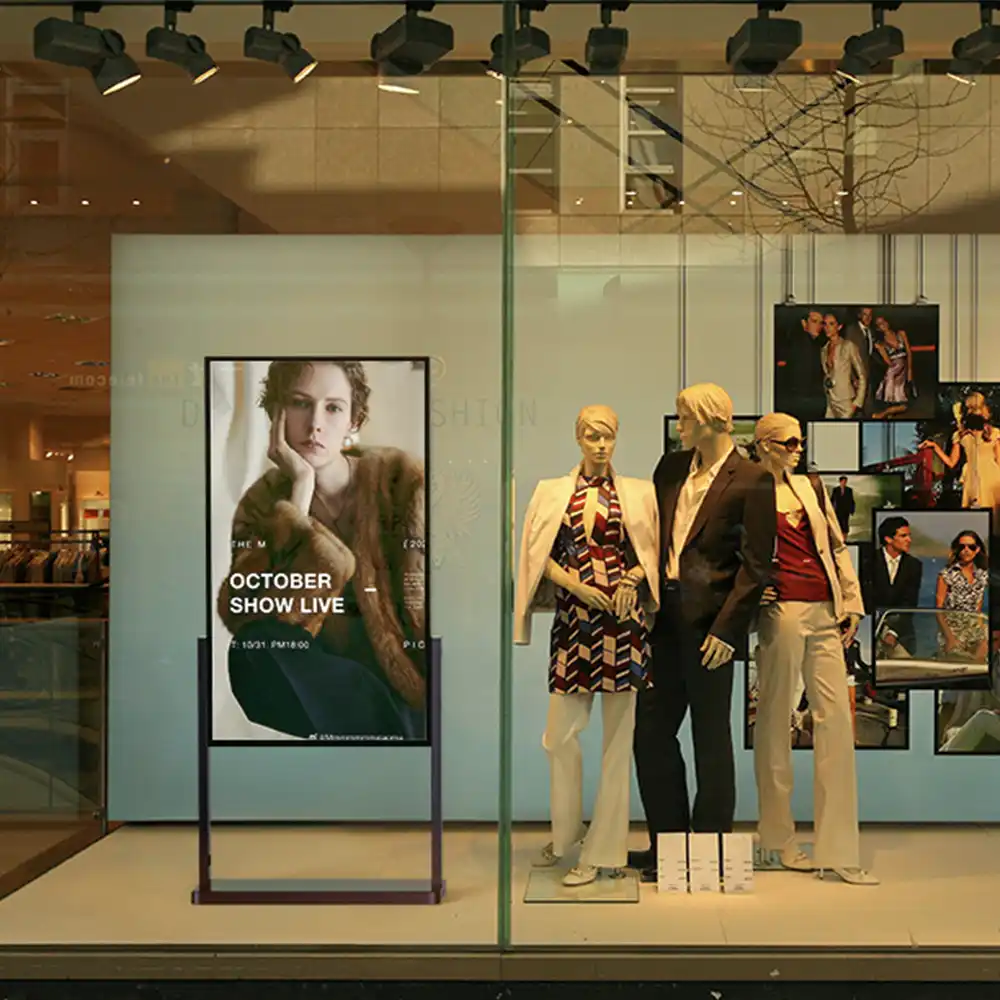
Virtual shelves, product configurators, customer feedback terminals, interactive shop windows, or digital checkout solutions.
Gastronomy:
Digital ordering systems, menus, self-order kiosks, customer reviews, and promotions.
Business & Administration:
Visitor check-in, digital wayfinding, meeting room booking, employee feedback, or digital bulletin boards.
Public institutions:
Information terminals, ticket sales, citizen services, orientation aids for visitors, or application forms.
Events & Trade Shows:
Interactive presentations, contests, lead generation, digital business cards, or live polls.
Healthcare:
Patient check-in, appointment booking, hygiene information, patient call systems.
What should you pay attention to?
User-friendliness:
Intuitive operation, clear menus, and fast response times are a must. Users expect the operation to be as easy as on a smartphone or tablet. Test the usability with real users!
Hygiene:
Touchless solutions or easy-to-clean surfaces are particularly important in public areas. Inform users about hygiene measures (e.g., cleaning, disinfection) and offer alternatives such as QR codes.
Data protection:
Ensure that your solutions comply with the GDPR, especially when it comes to personalization or data collection. Provide users with transparent information about how their data will be used and obtain their consent if necessary.
Robustness:
Interactive displays must be designed for continuous use and heavy-duty applications. Look for vandal-proof housings, scratch-resistant surfaces, and reliable hardware.
Integration:
Interfaces to POS systems, CRM, or other applications increase usability and create added value for operators and users.
Accessibility:
Ensure that your solutions can also be used by people with disabilities (e.g., limited motor skills, visual impairment). Large buttons, clear contrasts, and voice support are helpful.
Tips for resellers
- Offer demo terminals or test systems to demonstrate the advantages of interactive solutions live.
Nothing is more convincing than direct experience! - Train your customers in how to use the software and design content for interactive applications.
Demonstrate best practices and provide tips for optimal user guidance. - Use reference projects and best practices to convince potential customers.
Show how other companies benefit from interactivity. - Consider additional business opportunities such as maintenance, updates, and content services.
Interactive systems require regular maintenance and customization—a service that many customers are happy to outsource. - Offer advice on integration and interface connection.
The better the solution fits into the overall system, the higher the added value.
Trends and future prospects
- Touchless technologies:
Gesture control, voice control, and smartphone integration are becoming increasingly important—especially in sensitive areas such as healthcare and catering. - AI and personalization:
Artificial intelligence analyzes user behavior and automatically plays appropriate content. - Gamification:
Contests, quizzes, or challenges on the display ensure fun, motivation, and data collection. - Omnichannel integration:
Linking digital signage with the web, apps, and social media for a consistent user experience. - Analytics and performance measurement:
More and more systems offer detailed evaluations of interactions, usage time, and conversion.
FAQ – Frequently asked questions about interactive digital signage solutions
Are touch displays also suitable for outdoor use?
Yes, there are weatherproof and vandal-proof outdoor touch displays. Pay attention to IP certification, temperature range, and UV resistance.
How can I ensure hygiene with touch systems?
Use touchless technologies, special protective films, or regular cleaning. Inform users about hygiene measures, e.g., by placing notices on the device.
Which sensors are useful for digital signage?
Motion sensors, cameras, NFC, RFID, or temperature sensors—depending on the application and objective. Sensor technology opens up new possibilities for personalization, control, and data collection.
How can I make interaction accessible to all user groups?
Make sure you use large, easy-to-read buttons, clear menus, and accessible design. Voice control or read-aloud functions help people with disabilities.
What are the advantages of integration with POS systems or CRM?
You can display personalized offers, loyalty programs, or targeted recommendations directly on the display—this increases sales and customer satisfaction.
Conclusion: Interactivity as a success factor in digital signage
Interactive digital signage solutions are much more than just a trend—they are the key to sustained attention, better service experiences, and measurable business success. As a reseller, you benefit from attractive additional business and a strong positioning as an innovation partner. Invest in consulting, training, and integration—and make your customers fit for the future of digital communication.