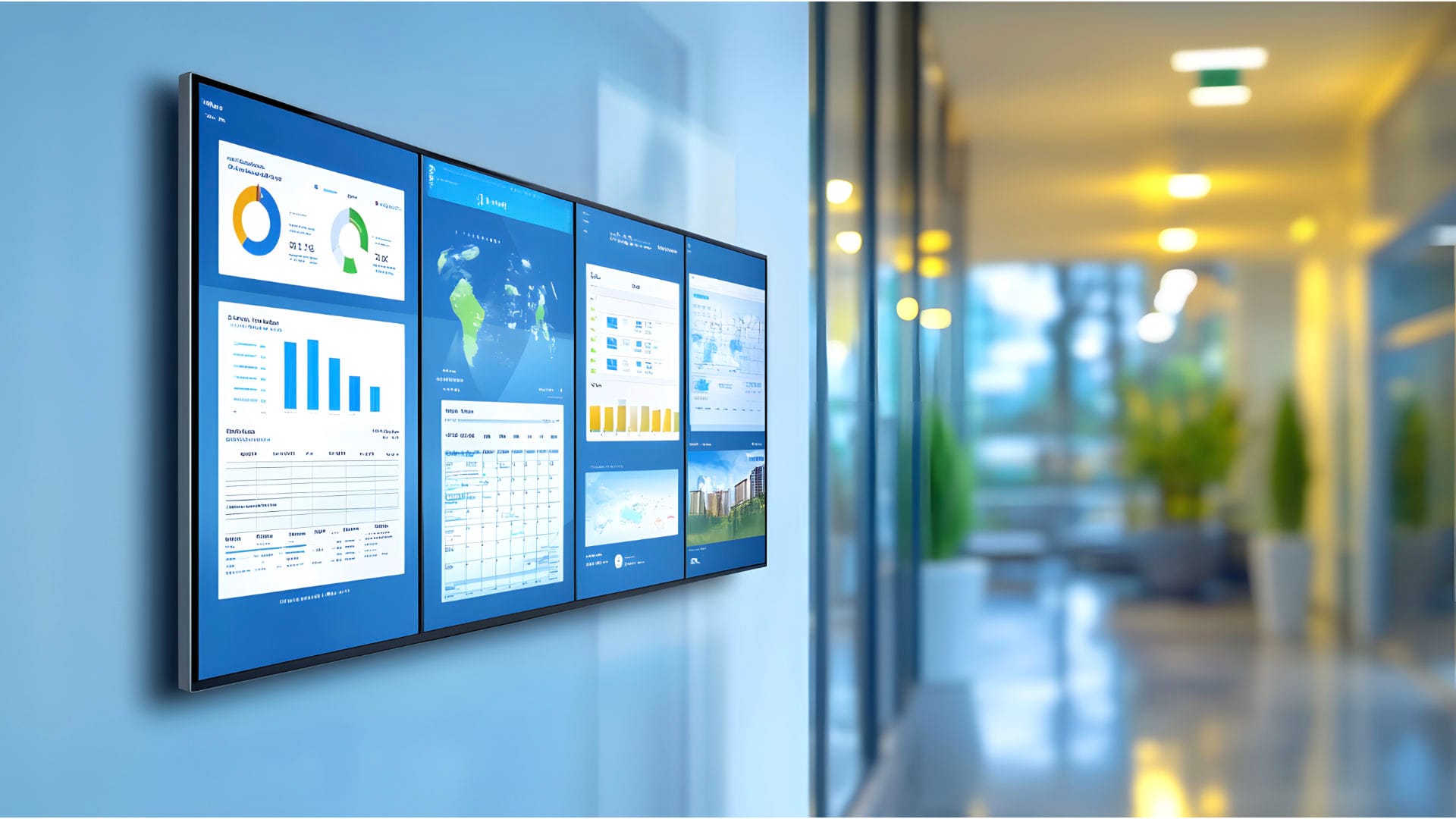
Why is digital signage a win for hotels?
In the hotel industry, service quality, flexibility, and a modern guest experience are what count. Digital signage helps you provide your guests with personalized information, optimize internal processes, and tap into new revenue potential. From the lobby to the conference room, digital displays offer numerous applications that go far beyond mere information. They make your business more efficient, attractive, and future-proof.
The most important applications of digital signage in hotels
1. Digital welcome and information displays:
Welcome guests personally with welcome messages, weather, event information, or customized information. Display current offers, local tips, safety, or hygiene measures, and create a positive first impression right in the lobby.
2. Wayfinding systems and room occupancy:
Digital signposts and door signs provide orientation and information about available or occupied rooms—ideal for conference hotels, large facilities, or resorts. Guests can quickly find their destination, waiting times are reduced, and staff are relieved of some of their workload.
3. Event and function listings:
Present current events, conferences, weddings, or leisure activities in a centralized and up-to-date manner. Participants can see at a glance where and when their event is taking place and receive important additional information.
4. Digital menu boards and restaurant information:
Advertise breakfast times, daily specials, bar and wellness offers, or special promotions. Menus, happy hour, or exclusive offers can be presented in a flexible and appealing way—even in multiple languages.
5. Self-service terminals:
Enable quick check-in/out, room booking, ticket purchases for events, wellness reservations, or feedback submission directly on the display. This saves you personnel resources and offers guests maximum convenience.
6. Guest information in the room:
Use in-room displays or TV information channels to inform guests about services, offers, weather, news, and events—individually and in real time.
Benefits for you and your guests
Improved guest information:
Up-to-date, multilingual, and personalized content is available at all times—from the welcome greeting to individual recommendations. Guests feel informed, welcome, and valued.
More efficient processes:
Automated updates and centralized control save time and human resources. Changes can be implemented in real time—e.g., for room reservations, events, menus, or service times.
Increase sales:
Cross-selling and upselling through targeted advertising of additional services and events. Advertise spa offers, restaurant specials, late check-out, or partner offers directly on the display.
Modern image:
A digital presence highlights your company's innovative strength, sustainability, and service orientation. Guests perceive your hotel as progressive and customer-focused.
Flexibility and scalability:
Whether you run a boutique hotel, business hotel, or large resort, digital signage can be customized to suit your needs and grows with your requirements.
Sustainability:
Digital ads save paper, reduce waste, and enable targeted communication without wastage.
Best practices: How to successfully use digital signage in hotels
1. Place displays in high-traffic areas:
Install displays in the lobby, near elevators, in the restaurant, in conference areas, or on each floor. This allows you to reach guests exactly where they need information.
2. Use templates for welcome and event announcements:
Create professional, brand-compliant templates for welcome messages, event announcements, or restaurant information. This saves you time and ensures a consistent look and feel.
3. Ensure ease of use:
Choose systems that are easy to use, even for changing staff. Intuitive interfaces, drag & drop, and mobile control make them easier to use.
4. Train your team in content maintenance and system use:
Regular training ensures that content remains up to date and technical problems are solved quickly.
5. Integration with PMS, booking systems, and event software:
Automate the display of room occupancy, events, or offers—this saves time and minimizes errors.
6. Utilize multilingualism and personalization:
Display content in your guests' language and tailor recommendations to individual needs—e.g., for business travelers, families, or event participants.
7. Enable feedback and interaction:
Offer digital feedback terminals, surveys, or guest reviews directly on the display.
Practical examples: Digital signage in the hotel industry
- Business hotel:
Uses digital door signs for conference rooms, an information display in the lobby for current events, and a self-service terminal for quick check-in. - Wellness resort:
Presents daily spa offers, weather information, and excursion destinations on displays in the lobby and at the elevators. - Boutique hotel:
Welcomes guests with personalized messages, provides information about breakfast times, and offers digital guest surveys. - Large conference hotel:
Centrally manages all event advertisements, integrates the systems with booking software, and provides multilingual information for international guests.
Trends: What's in store for the hotel industry?
- AI and automation:
Systems automatically suggest suitable additional offers, events, or services based on guest data and length of stay. - Touchless technologies:
Voice control, gesture control, and mobile self-service solutions are gaining in importance. - Omnichannel integration:
Digital signage is linked to apps, booking portals, and social media—for a seamless guest experience. - Personalization:
Content automatically adapts to guest type, language, or occasion. - Analytics and performance measurement:
Hoteliers receive evaluations showing which offers and information are particularly in demand—for targeted optimization.
Tips for successful implementation
- Start with a pilot project and gain experience.
- Use professional templates and pay attention to your corporate design.
- Integrate digital signage with your existing systems (PMS, event software, restaurant POS).
- Regularly ask guests and team members for feedback to optimize content and processes.
- Calculate total costs and compare different providers.
FAQ – Frequently asked questions about digital signage in the hotel industry
Can I display content in multiple languages?
Yes, many systems support easy maintenance and display of multiple languages. You can display content specifically tailored to your guest structure.
How quickly can I update event information?
Content can be changed in real time—even via smartphone or web browser. Changes are immediately visible on all relevant displays.
Are the systems also suitable for small hotels?
Absolutely—there are scalable solutions for every need and every budget. Even a single display can have a big impact.
What is the best way to promote additional offers and events?
Use targeted placements (e.g., elevators, restaurants, rooms), eye-catching graphics, and changing slides for maximum attention.
How do I measure the success of my digital signage measures?
Many systems offer analytics tools that show which content is frequently viewed or clicked on. Combine this data with booking figures and guest feedback.
Conclusion: Digital signage as a success factor for hotels
Digital displays make hotels more efficient, hospitable, and innovative. They improve information, increase additional sales, and reduce the workload on your team. Whether you run a boutique hotel or a large resort, digital signage is flexible, scalable, and offers real added value to guests and employees alike. Invest in professional solutions, take advantage of the many possibilities, and make your hotel fit for the future.